Digital PR for link building: what it actually looks like when you stop paying for links
A client asked me last spring why a single mention in a niche engineering publication had done more for her rankings than four months of cold outreach. The answer wasn't romantic. The journalist had linked to her data because she gave him something he couldn't find anywhere else: her own factory floor numbers. That's digital PR for link building in one sentence. You stop begging for links and start earning them by being worth quoting.
I'll be honest, when I first moved from classic link building to this approach, I got it wrong in a very specific way. I treated it as outreach with better wrapping paper. It isn't. The whole mechanic flips. You're no longer the person asking. You're the person supplying.
Key Takeaways
- Digital PR earns editorial links because a journalist finds your material useful, not because you paid or asked nicely.
- Cold outreach reply rates sit in the low single digits; a pitch built on original data or expert commentary lifts that number substantially.
- Measure attribution properly or you'll credit the wrong channel and kill the programme you should be scaling.
- Budget realistically: a first campaign rarely breaks even before month three.
- Link quality beats volume every time. One followed link from a relevant outlet is worth more than fifty directory placements.
- Verify every link you earn. Nofollow, redirect chains, and stripped links are more common than you'd expect.
Why link building quietly stopped working the old way
Google's spam updates didn't kill link building. They killed lazy link building. The sites I watched lose visibility in 2024 and 2025 had one thing in common: they'd built their profile through paid placements and low-quality guest posts, and when the algorithm tightened, the whole house went with it.

What still works is the thing that always worked. A link from a publication that actually has readers, given voluntarily, in the middle of a relevant article. Search engines treat that as a vote. Everything else is a transaction they can spot.
The economics of asking nicely
Here's the arithmetic that pushed me to change my process. When I sent generic outreach emails offering a guest post in exchange for a link, I'd get roughly one reply per forty sends. That's under 3%. And of those replies, maybe a third turned into a placement. So somewhere around 1 in 120 emails produced one link, often from a site with real traffic of about twelve people and a dog.
When the pitch was tied to something a journalist could use — a dataset, a contrarian take from a named expert, a story with numbers nobody else had — my reply rate moved into double digits. Not because my writing got better. Because I stopped asking for a favour and started offering goods.
What most agencies still do, and why clients pay for it
Plenty of agencies have rebranded their link buying as "digital PR" and changed absolutely nothing. Emails go out, invoices go out, links appear. If you're evaluating an agency in Europe or anywhere else, ask one question: can you name the last three journalists who covered something you sent them, and what they wrote? If the answer is a spreadsheet of URLs with no story attached, you're buying links with a new label.
What actually makes a pitch earn the link
The gap between a pitch that gets ignored and one that gets published usually isn't the idea. It's the packaging.

Journalists work to deadlines and have a beat to cover. Your job is to make their job easier. That means the email needs a subject line that survives a crowded inbox, a first sentence that explains why this matters now, and the assets — quotes, images, raw numbers — already attached and formatted.
The ingredients that do the heavy lifting
In my experience, most successful campaigns lean on one of a small number of formats:
- Original data from your own operations, surveys, or platform. This is the strongest lever, and the hardest to fake.
- Expert commentary on a story that's already breaking. Fast, cheap, and gets you cited in roundups.
- A calculated angle — a seasonal cost breakdown, a regional comparison, a "how much would this cost if you did it your way" piece.
- Contrarian positions from a named person willing to go on record
- Free tools or calculators that a reporter can link to as a resource
What a real example looks like, with numbers
One campaign I ran for a mid-sized B2B retailer went like this. We pulled eighteen months of internal order data, found that returns spiked on a specific weekday in a specific region, and wrote it up as a short report. Production time: about 22 hours across data cleaning, writing, and a simple chart pack.
We pitched 31 journalists. Nine replied. Four ran pieces. Of those four, three linked with a followed link from outlets with real editorial staff. The largest domain had an authority score in the low 80s. All four links were indexed within eleven days of publication, which I checked manually rather than trusting a tool.
That's not a spectacular campaign. It's a normal one. And it beat my old outreach ratio by a factor I'd rather not calculate, because it makes me slightly embarrassed about the years I spent sending templated emails.
How to measure what you actually earned
Attribution is where most digital PR programmes fall apart. You get four placements, you don't know which one moved the needle, and by the time you've built a report the client has lost interest.
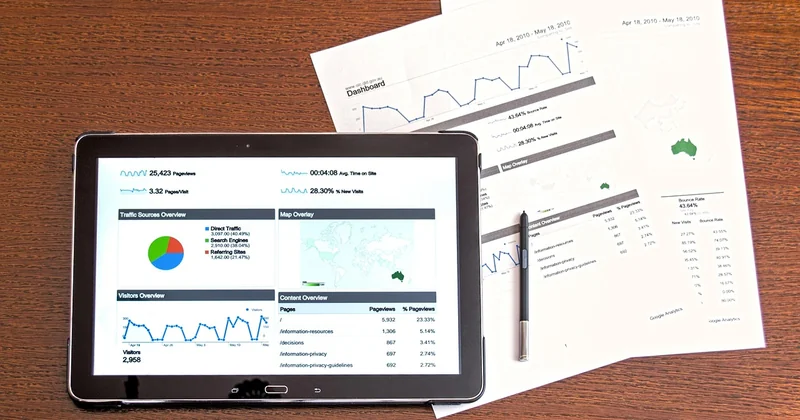
What I do now, and I'll die on this hill, is track three layers separately:
- Placement layer — did the link go live, is it followed, does it point to the right URL, and is it in the body text rather than a boilerplate footer?
- Indexation layer — has the search engine actually crawled and indexed it? This takes days, sometimes weeks. Check it manually before you celebrate.
- Impact layer — did the target page's rankings for the relevant terms shift in the weeks after the link appeared? Correlate, don't assume. One link rarely moves anything on its own; a cluster might.
The tools that are actually worth the money
A rank tracker, a backlink checker to verify the link exists and its attributes, and a spreadsheet. That's it. The expensive "PR platforms" mostly sell you a media database you could build yourself in a week with a search engine and some patience.
What the database does buy you is time, and if your team is small, time is worth more than money. Just don't confuse having the database with having a strategy.
The indexation trap nobody warns you about
Roughly a third of the links I've been promised by placements never indexed in a useful way, either because the host page had no internal links pointing to it or because the outlet disallowed crawling on that section. If you report placements without checking indexation, you're reporting theatre.
What digital PR costs, and what you should expect to pay
Nobody puts real numbers on this, which is strange, because everyone asks. So here's what I've seen across projects.
A single well-run campaign — one data piece, one round of pitching, follow-up, and reporting — takes between 25 and 60 hours of work depending on how much original research is involved. At a blended hourly rate, that's a meaningful investment, and the cost per acquired link lands somewhere between the price of a cheap paid placement and the price of a strong editorial relationship. The editorial relationship wins long-term, but it takes longer to pay off.
| Approach | Typical cost per link | Time to first result | Link quality | Risk |
|---|---|---|---|---|
| Paid link placement | Low to mid | Days | Highly variable, often poor | High — search engines penalise this |
| Cold outreach guest posts | Low | Weeks | Poor to mediocre | Medium |
| Digital PR campaign | Mid to high | One to three months | Strong, often top-tier domains | Low |
| Reactive expert commentary | Very low | Days | Varies by outlet | Low |
The reactive commentary row deserves a note. It's the cheapest entry point and the one most teams ignore. Set up alerts on your topic, be ready with a quote within hours, and you'll pick up links on outlets that would never run a full feature on you.
How to qualify a journalist or outlet before you pitch
Not every outlet is worth your time. Before you add anyone to a list, check three things: does this publication cover your topic regularly, does its site actually get organic search traffic, and does it link out in the body of articles rather than burying links in author bios.
A niche trade publication with genuine readership will outperform a general news site with a prettier logo every single time. I've made that mistake. I chased a mention in a large national outlet, got it, and the link was nofollowed in a sidebar. Meanwhile a small industry blog with a devoted audience sent real referral traffic for months.
The parts of digital PR that can bite you
Two things deserve caution. First, sponsored content is not the same as earned coverage, and if you don't disclose it, you're exposing yourself and the outlet. Second, some "digital PR" agencies still buy links and call it outreach — check whether the placements appear on pages that look like real editorial or like a paid directory dressed up.
If a journalist offers to run something for a fee, that's advertising. Nothing wrong with advertising. Just don't count it as a link-building win.
Is digital PR just outreach with a new name?
No. Outreach is a tactic within it. Digital PR is the whole approach: produce something worth covering, identify who covers that beat, offer it, and measure what came back. The email is the smallest part of the job.
How long before I see ranking movement?
From my own projects, expect three to six months before a campaign's links show up in measurable ranking shifts, and only if the target pages were already close to competing. Links accelerate; they don't resurrect a page targeting the wrong terms.
Can I run this without a dedicated PR person?
Yes, with one caveat: it will consume the time of whoever does it. A single marketer can run two campaigns a quarter alongside other work. Beyond that, either hire or accept slower output.
Where this leaves you
The uncomfortable part of digital PR for link building is that it requires you to have something to say. Paid links let you skip that step. You buy the vote without earning the attention, and for a while it looks like it works. Then it doesn't.
The campaigns that hold up are the ones where someone on your team found a genuinely odd fact, wrote it down clearly, and sent it to a journalist who was already thinking about the topic. No platform required. No secret tactic. Just a willingness to be a source rather than a customer.
If you take one thing from this, make it the indexation check. It's the least glamorous step and the one that separates a real programme from a very expensive spreadsheet of URLs that link to nothing anyone will ever find.